Moving Away from Monoliths: Strategies and Patterns
Introduction
In the lifecycle of software development, architecture is rarely static. What begins as a simple, efficient solution often grows into a complex web of dependencies. This post explores the journey of moving away from monolithic architectures.
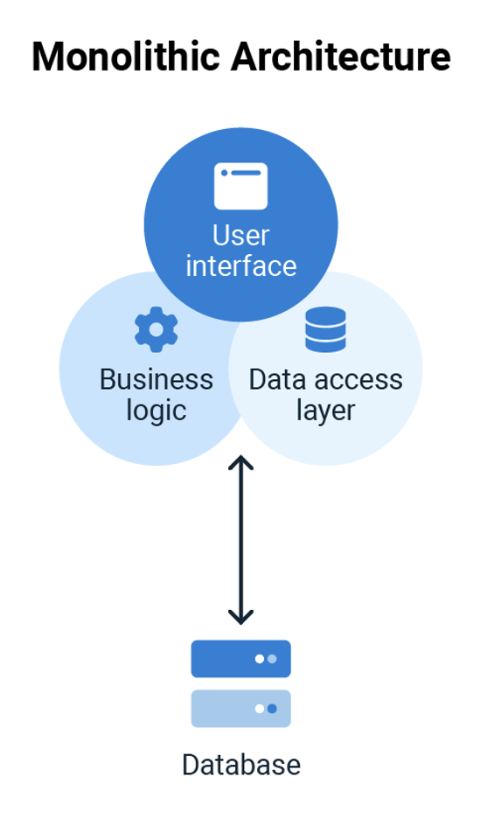 Traditional layered monolith: All components deployed as a single unit
Understanding the Monolith
A monolith is defined as a single deployable unit that handles all business logic. In the early stages of a project, this approach offers distinct advantages, but it often becomes a liability as the product scales.
The Pros: The Quick Start
- Simple to Start: Easy initial development, testing, and deployment.
- Fast Initial Iteration: Debugging is easier because all code runs in a single process.
- Lower Early Cost: Requires less infrastructure overhead for small projects.
The Cons: The Growing Pain
- Hard to Scale: You cannot scale specific features; you must scale the entire application inefficiently.
- Fragile & High Risk: A small bug can cause complete system failure. Furthermore, updates require full, high-risk redeployment.
- Technology Lock-in: It becomes difficult to adopt new languages or frameworks once the codebase is established.
Signs It’s Time to Move On
How do you know when you have outgrown your architecture? The “pain points” usually manifest as:
- Slow deployments.
- Difficult scaling.
- Tight coupling between teams and features.
- A fragile codebase where dependencies resemble a “spaghetti” graph.
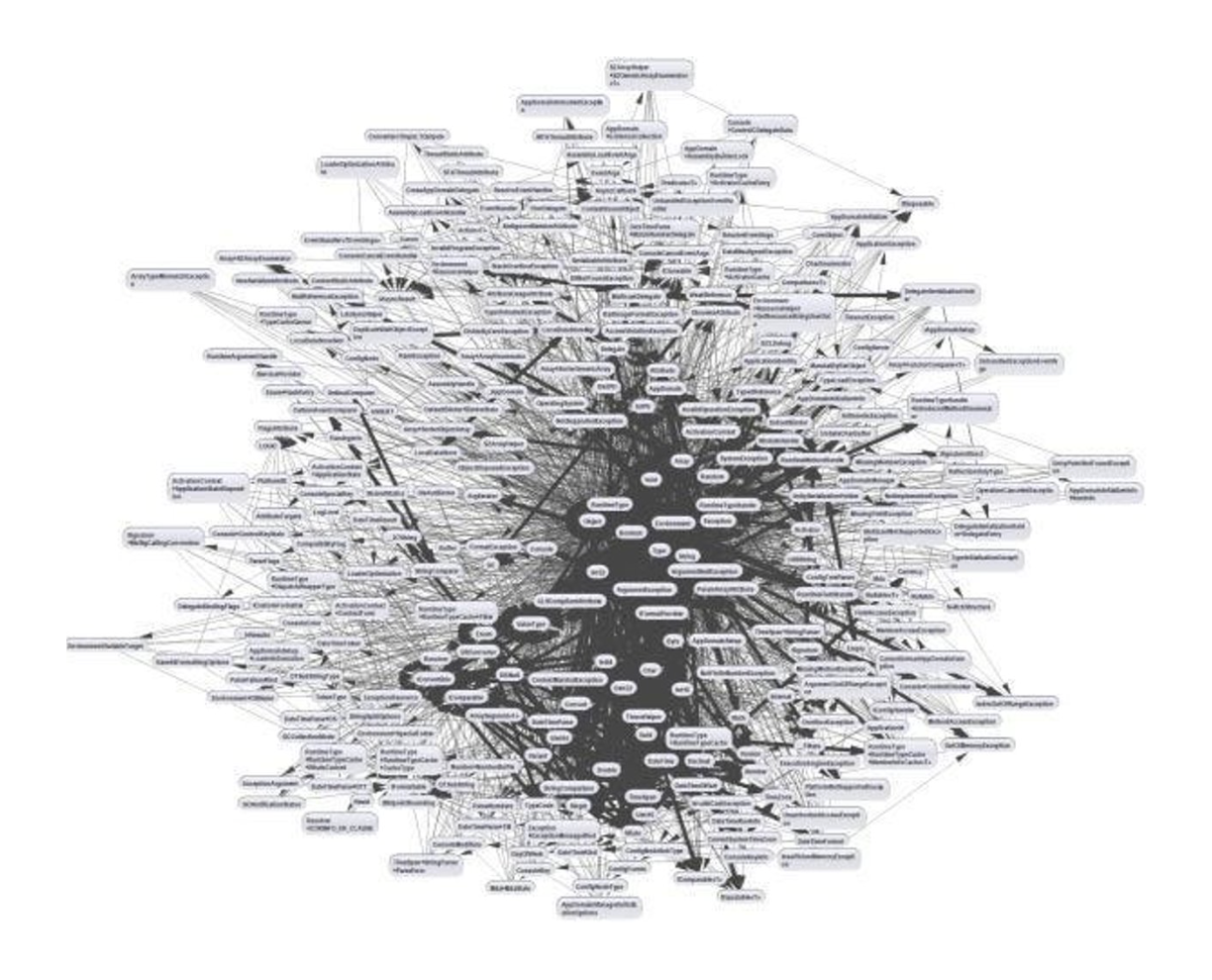 Big Ball of Mud: A monolith with tangled dependencies and no clear structure
The goal of moving away from a monolith is to achieve Modularity. Modularity allows for better management of change.
The Value Chain of Modularity: Competitive Advantage -> Speed-to-market -> Agility (Deployability, Testability, Maintainability).
Architectural Strategies for Evolution
When evolving a system, you don’t have to choose just one path. Often, a combination of strategies yields the best results.
1. The Strangler Fig Pattern
Instead of rewriting the monolith from scratch, use the Strangler Fig Pattern. This involves building a new “strangler application” around the edges of the old system. Over time, the monolith shrinks as new features are added to the new system and old features are migrated over.
2. Domain-Driven Decomposition
To determine how to split your application, use Domain-driven Decomposition. Decompose services based on business capabilities rather than technical layers.
- Example: An Insurance monolith might be split into Sales (Purchasing, Claims) and Marketing (Campaigns, Analytics) subdomains.
- This ensures that new modules are designed around cohesive business logic.
3. Event-Driven Decoupling
To prevent your new microservices from becoming a “distributed monolith,” use Event-driven Decoupling. Modules should interact asynchronously to maintain low coupling.
- Implementation: Use event pipelines (like Kafka) to allow services (e.g., Billing, Content) to communicate without direct dependencies.
Key Principles for Success
Migrating to a distributed architecture requires a robust technical foundation.
Technical Foundations
You must establish shared infrastructure before scaling out:
- Shared Infra: API Gateways, Message Buses (EventBridge/Kafka), and Shared Auth (JWT, IAM).
- Deployment/Orchestration: Containerisation (ECS, Kubernetes) or Serverless (Lambda).
- Monitoring & Tracing: Distributed systems require deep observability tools like OpenTelemetry, Grafana, or CloudWatch.
Strategic Advice: Monolith First
Despite the popularity of microservices, the “Monolith First” strategy is often the safest bet.
“You shouldn’t start a new project with microservices, even if you’re sure your application will be big enough to make it worthwhile.”
A monolith allows you to explore system complexity and component boundaries before committing to a distributed system. You can treat the early monolith as a Sacrificial Architecture-a master architecture intended to expire once knowledge of the domain increases.
Conclusion
Migration is difficult, but avoiding it can be worse. Remember the adage: “If it hurts, do it more often”. By decomposing large migrations into sequences of little ones, the process becomes manageable, and the pain of deployment decreases over time.